Camera system / tracking
Holding the Moving Subject
Begin with the shot: a player breaks into space and the picture stays composed. Behind it are a support, a responsive camera, an operator reading play, and a signal path ready for the director.
Trace the coverage01 / Start with the picture
What tracking makes possible
A tracking camera follows a subject through space while preserving a readable composition. It can hold a player through a run, follow a vehicle around a circuit, or maintain a relationship between a ball carrier and nearby action. The useful result is not simply motion in the frame. It is a shot that gives the audience enough context to understand what is unfolding and gives the director a reliable option in the live sequence.
Before choosing equipment, describe the desired view. Identify the subject, how quickly it may move, the portion of the venue it must cross, and the moments when another player or object could interrupt the line of sight. Consider whether the shot is intended as a continuous live angle, an occasional cutaway, or a recorded source for replay. Those intentions affect position, framing, communications, and how the feed is presented to the production desk.
Trace the camera and support
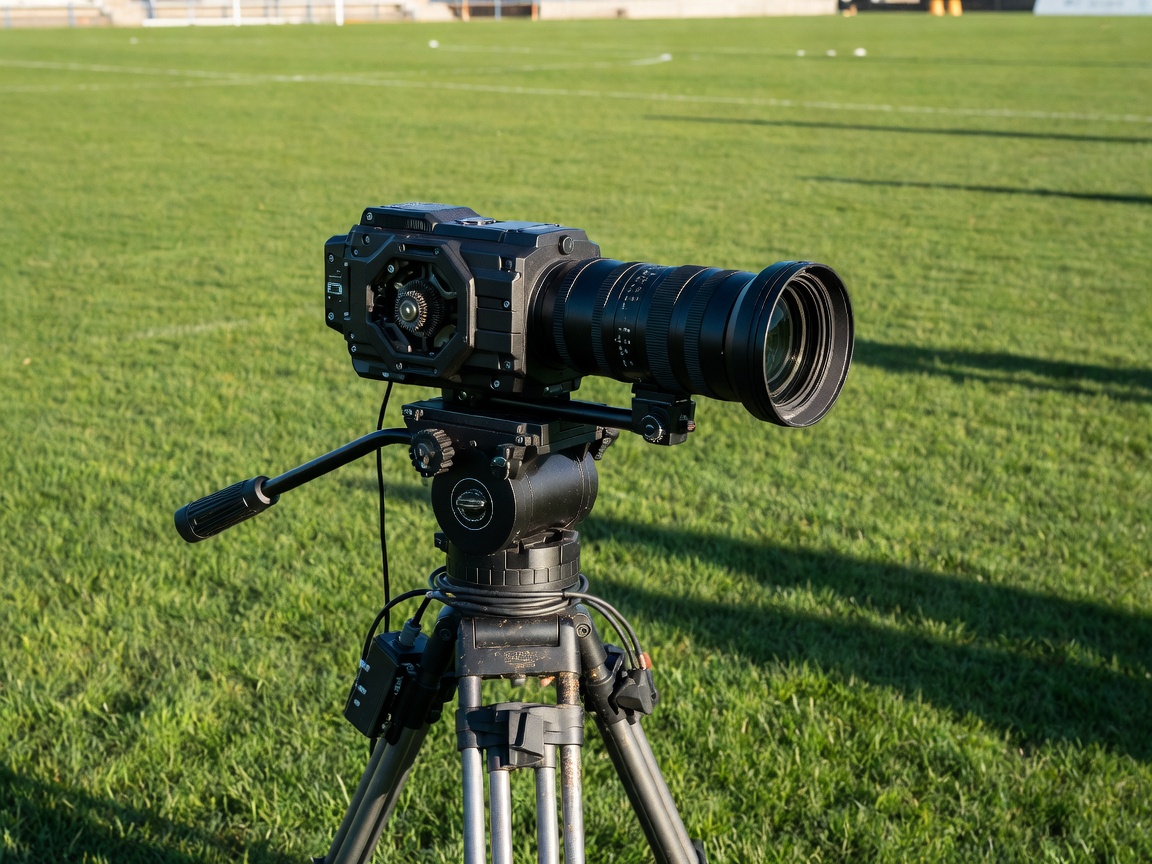
The camera head and its support shape the operator’s ability to pan, tilt, and maintain a stable frame. A fixed tripod position may serve a contained zone; a mobile platform or rail-based arrangement may cover a different path. The correct choice is venue- and production-specific. It depends on space, access, safety planning, the required range of movement, and the production’s acceptable operating footprint.
Lens selection also begins with the shot. A wider field of view can help keep unpredictable action inside the frame, while a tighter view can isolate a subject but makes anticipation more demanding. A long lens can magnify small camera movements and make framing corrections more visible. Operators therefore rehearse the route and likely transitions, check focus and exposure across the relevant area, and agree where the camera should settle when the subject leaves the planned coverage zone.
Some productions use remote or robotic heads to repeat moves or position a camera where an operator cannot stand. Remote control changes where the operator works, but it does not remove the need for situational awareness. The team needs to understand limits of movement, obstruction risks, control latency, communications, and what happens if the camera loses its subject. A camera should not be treated as autonomous simply because its movement can be controlled from elsewhere.
Coordinate the operator and director
Tracking is an interpretive task. The operator reads the developing play, chooses when to begin a move, anticipates where the subject will go, and decides how much surrounding context belongs in the frame. A producer or director may set editorial priorities, but the operator must translate them into a picture that remains usable as events change. A concise camera call, shared terminology, and clear intercom practice support that handoff.
Camera tally and multiview monitoring help the crew understand which source is selected and what other angles are ready. The precise tally implementation differs between facilities, so the production should check the camera control unit, routing, and control-room design rather than assume every installation behaves identically. Similarly, the camera operator and director should agree whether a tracking source is expected to hold a shot for a long passage or offer brief, pre-planned looks.
Follow the signal path
A moving camera’s picture must travel from the camera position to the appropriate production destination. Depending on the system, the route may use a cable, a camera control unit, a managed wireless link, or a combination of components. The production team should establish the actual route, supported formats, power requirements, return video, intercom, tally, and any control connections before the event. A camera signal that arrives without the needed return or communications may be difficult to operate as intended.
Wireless transport can reduce some physical cable constraints, but it introduces its own planning questions: permitted spectrum, frequency coordination, venue conditions, line of sight, interference management, and contingency arrangements. A wired route has different concerns, including cable distance, protection, movement, and safe crossing points. Neither option is universally preferable; match the plan to the venue and verify it with qualified technical staff.
Limits worth rehearsing
Tracking cannot guarantee an unobstructed view. Officials, other players, barriers, weather, lighting changes, and sudden direction changes can all affect the shot. A moving support also needs a carefully controlled route and a defined operating area. For elevated or mobile positions, production and venue personnel should check access, structural requirements, permissions, and separation from spectators and play.
Build a fallback into the camera plan. Name a complementary angle, decide how the operator signals a blocked or lost shot, and make sure the director can return to a stable camera without confusion. Rehearse representative movement, not just a static frame. Then confirm the signal, communications, and intended cut with the people who will use the source. The result is a tracked picture that fits the programme rather than a technical move without editorial purpose.
For a compact planning outline, draft a production note. For cameras mounted above the field, continue to overhead coverage.
Signal path
From moving subject to selected shot
Operational constraints
What should a tracking rehearsal cover?
Rehearse typical pace changes, direction changes, occlusions, focus transitions, and handoff cues. Confirm the camera’s movement area, communications, signal return, and a practical fallback angle.
Does a remote head remove the need for an operator?
No. Remote controls change where and how a camera is operated. A person still needs to frame the action, react to changing play, coordinate with the director, and work within the camera’s movement limits.
What should be checked before choosing wireless transport?
Ask the venue and technical team to verify spectrum coordination, line of sight, local conditions, supported formats, power, return video, intercom, and a contingency if the link becomes unreliable.